Bindjareb-Peel Geo Park Guide
Bilya Maadjit (Murray River)
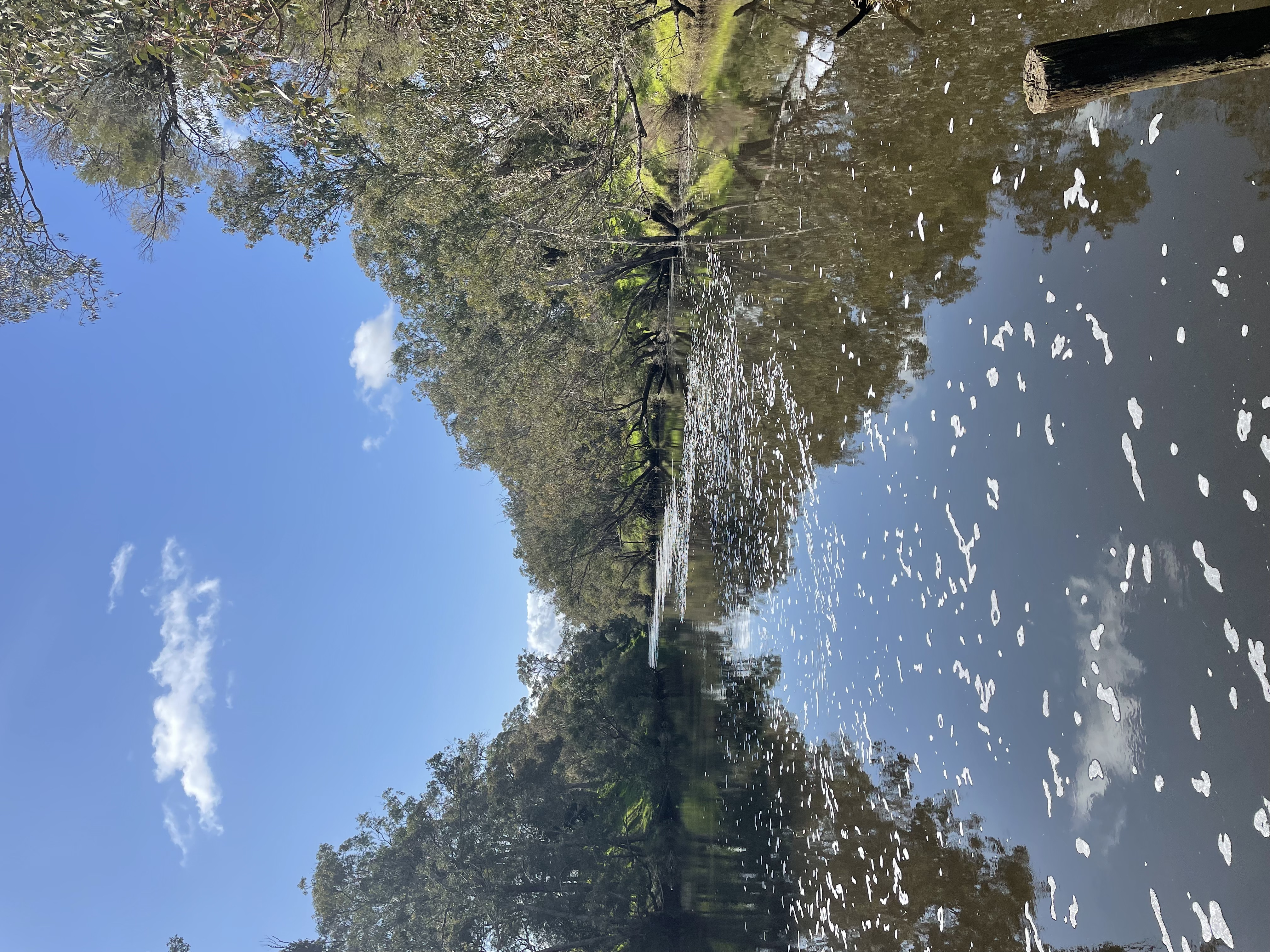
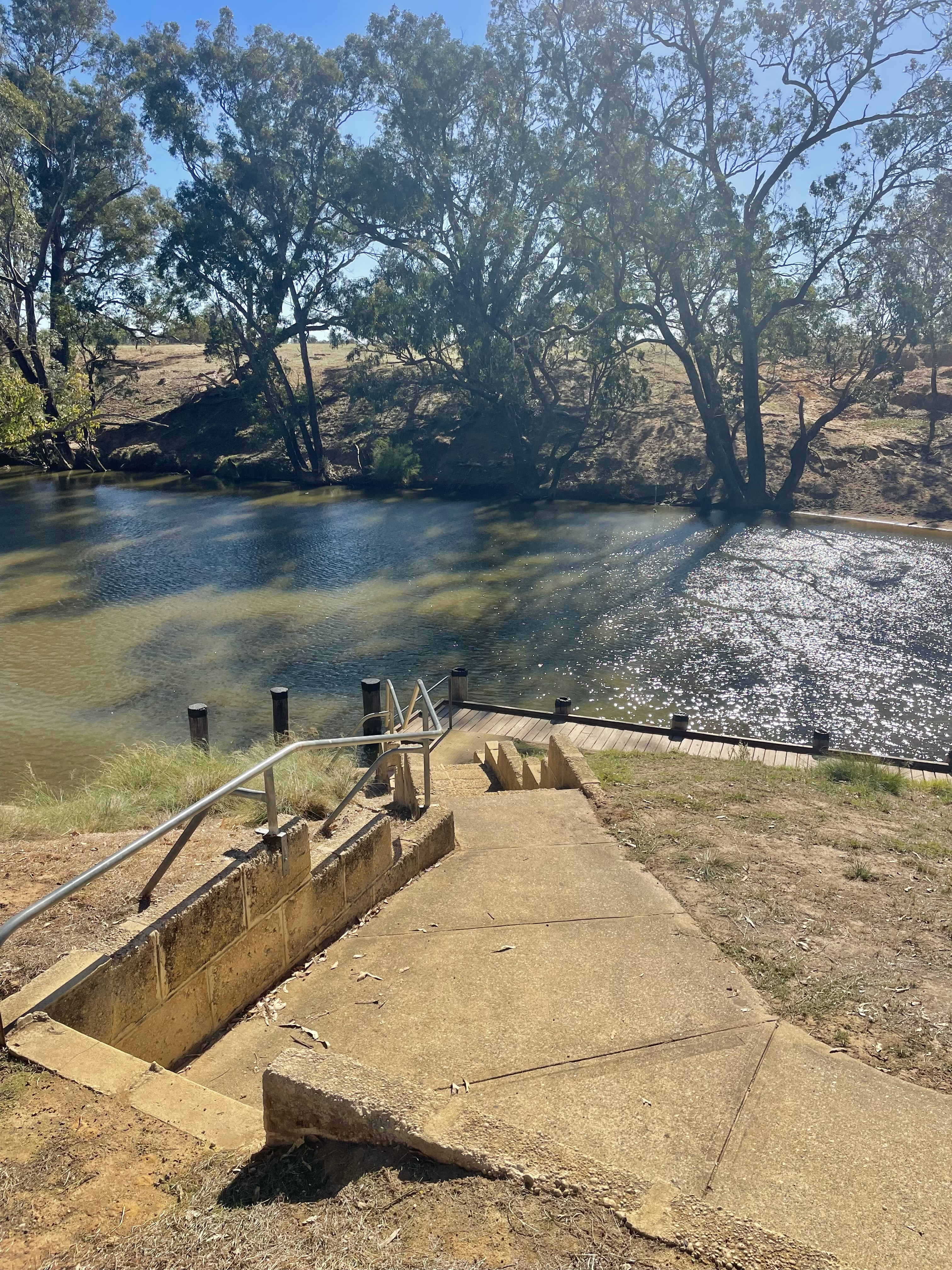
Bilya Maadjit (Murray River) is one of the few major waterways near Perth that remains undammed for public water supply. Its catchment extends across much of the Wheatbelt region and into the southwest of Western Australia. The Murray is in Bindjareb Boodja, which means ‘swamp country’ in Noongar. The Bindjareb are the people of the wetlands and key to the area. (Shire of Murray, 2025).
Accessibility
carparkdisability accessdisability parkinghard surface path
Activities
bird watchingcanoeing kayakingfishingmountain bikingnature photographyswimmingwalking
Astrophotography potential
No Astrophotography Potential
Astrophotography grade
None
Facilities
campsitecaravan parkgrass areahotelnightime lightingpicnic areatoilet
Way finding
No Way Finding Support
Address
Location
Henry Street, Pinjarra, Western Australia, 6208, AUS
Indigenous community
Bindjareb People
Land tenure
Shire of Murray
Entry road
Sealed Road (Bi-Directional)
Car park distance (m)
20
Entry fee
No
Infrastructure grade
9
Natural amenity
8
Plumbed infrastructure
Yes
Visible powerlines
Yes
Coordinates (lat, lng)
-32.625, 115.875
Food & drink
Wine Tree Cidery, Red Gum Wine Estate, Peel Estate Wines
Tours & experiences
Pinjarra Murray River Walk, Murray River Pub Trail
Site Highlights
You may also want to know...
- Bilya Maadjit (Murray River) is one of the few major waterways near Perth that remains undammed for public water supply.
- Its catchment extends across much of the Wheatbelt region and into the southwest of Western Australia.
- The Murray is in Bindjareb Boodja, which means ‘swamp country’ in Noongar.
Biotic features
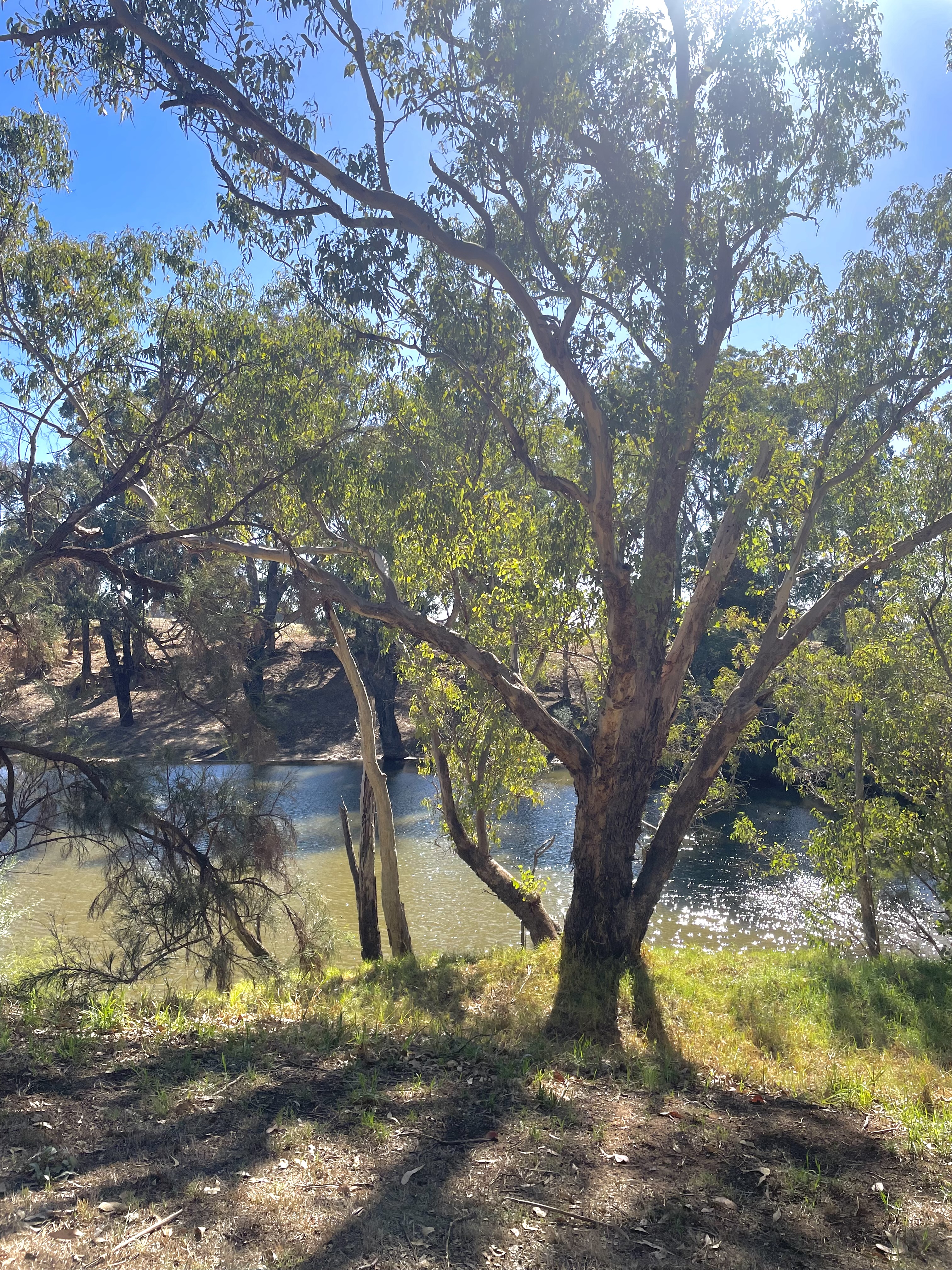
Flora: Riparian vegetation along the river includes flooded gum trees (Eucalyptus rudis), with sheoaks (Casuarina obesa) and saltwater paperbarks (Melaleuca cuticularis) also commonly present. In some areas, standing dead Melaleuca rhaphiophylla trees, killed by saltwater inundation, are visible. Low-lying riverbanks are often fringed with sedges and saltmarsh vegetation. As the river rises into the Darling Scarp, woodlands transition to jarrah (Eucalyptus marginata) and marri (Corymbia calophylla) forests. Understories include grass trees (Xanthorrhoea) and banksia shrubs.
Fauna: The river supports a variety of fauna, including bottlenose dolphins and rakali (Native Water Rat, Hydromys chrysogaster). Fish species recorded include yellowtail grunter, cobbler, sea mullet, western hardyhead, pouched lamprey, and black bream. Birdlife is diverse, with both migratory and resident waterbirds, bush birds, and birds of prey. Across the river’s ecosystems, up to 70 bird species have been observed.
Abiotic features
The Murray River receives water from two main tributaries: the Hotham River, which originates near Narrogin, and the Williams River, which begins between Narrogin and Williams. These rivers are the primary drainage systems for the eastern wheatbelt. As the Murray River travels through the vegetated areas of the Darling Range toward Pinjarra, it carries sediment from both the Yilgarn and Darling Scarp. Along its banks, layers of sediment reveal four distinct periods of deposition—Coolup, Wellesley, Boyanup, and Blythewood—ranging from the most recent to the oldest. The river flows across the coastal plain between the Darling Scarp to empty into the Peel-Harvey Estuary near Mandurah through a delta system of islands.
Cultural aspects
Aboriginal: This particular section of the Murray River holds deep cultural importance in Noongar stories, including sites linked to the snake spirit Warrkal, and locations traditionally used and still used today for camping, fishing, and swimming. Notable places include ‘the log’, a culturally significant site where many children also learned to swim and fish, and Wilson’s Rock, another place of strong spiritual and cultural meaning for the Noongar people (Department of Culture and Arts, 2015).
European: Thomas Peel left Britain in 1829 and arrived in Australia. Peel was granted land stretching from Woodman Point to the banks of the Murray River, between the coast and the Darling Scarp. The settlement gradually grew, and by late 1830, a community had formed at Pinjarra, located near the upper navigable reach of the Murray River and a natural crossing at Oakley Brook. Settlement did not extend much further south due to escalating tensions with the local Aboriginal population.