Bindjareb-Peel Geo Park Guide
Coolenup Island
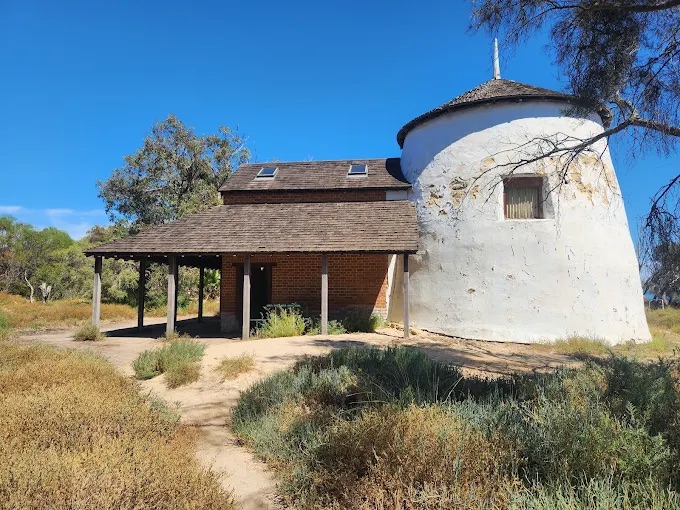
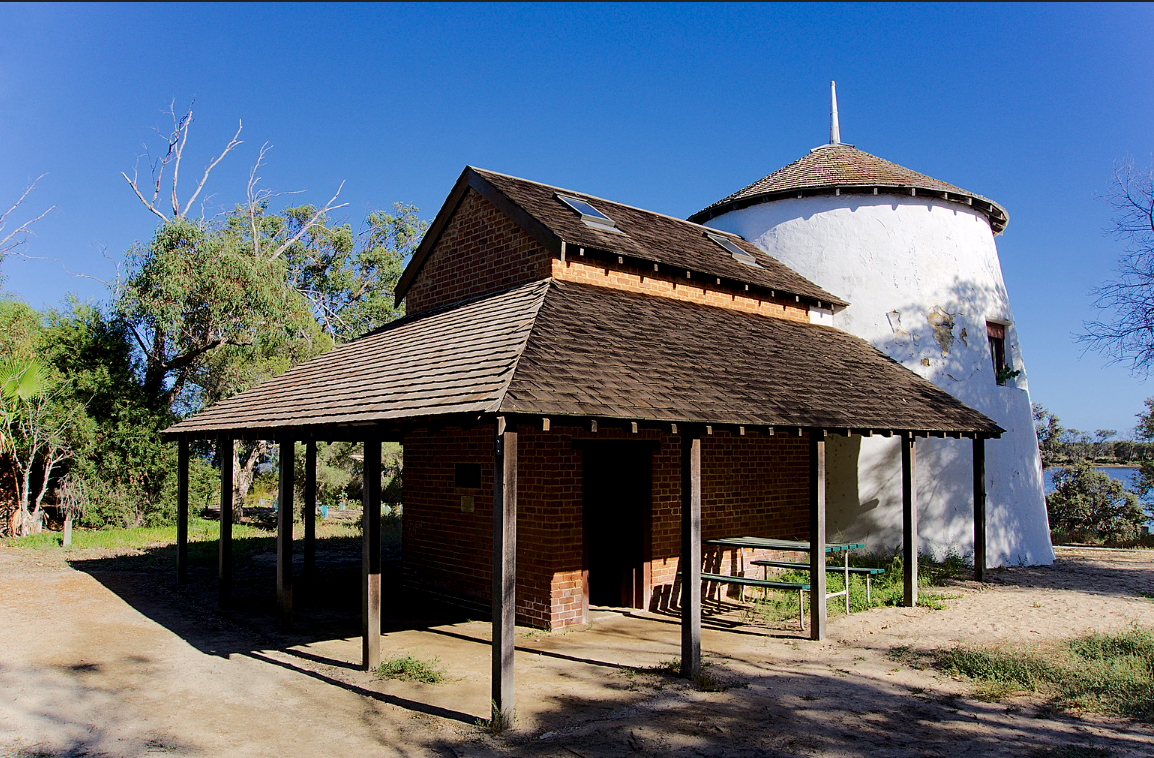
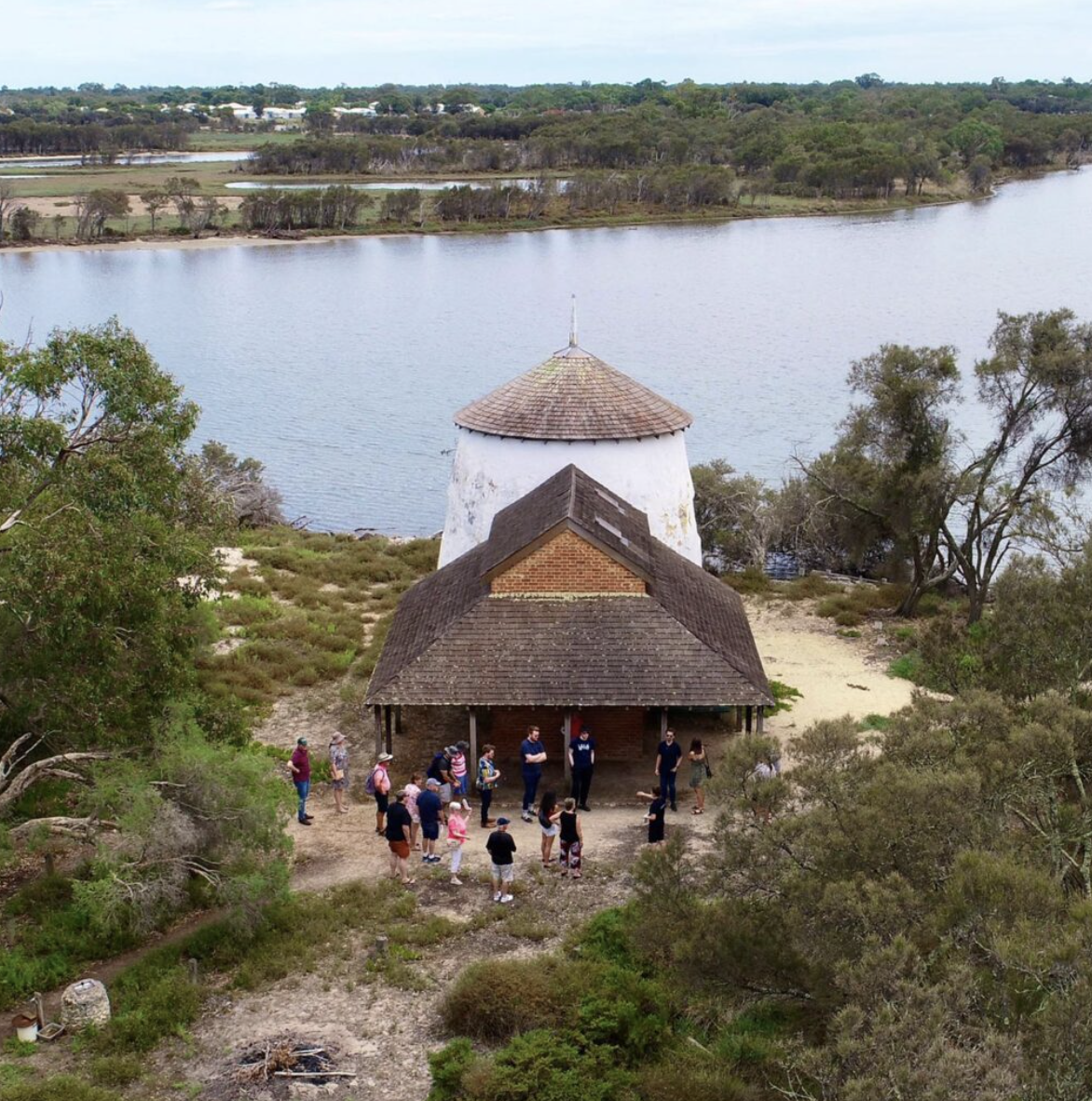
Coopers Mill is located at the north-western tip of Coolenup Island, within the Murray Delta where it meets the Peel Inlet. While the site can be viewed from the water's edge, it is only accessible for walking exploration by boat.
Accessibility
carparksoft surface path
Activities
bird watchingcanoeing kayakingnature photography
Astrophotography potential
unobstructed view
Astrophotography grade
None
Facilities
campsitecaravan parkhotel
Way finding
basic identificationinformationalregulatory
Address
Location
Tonkin Drive, Mandurah WA
Indigenous community
Bindjareb People
Land tenure
Shire of Murray
Entry road
Gravel/Unsealed Road
Car park distance (m)
40
Entry fee
No
Infrastructure grade
7
Natural amenity
8
Plumbed infrastructure
No
Visible powerlines
No
Coordinates (lat, lng)
-32.576, 115.766
Food & drink
Peel Estate Wines, The Cray and Redmanna Waterfront Restaurant
Site Highlights
You may also want to know...
- Coopers Mill sits at the north-western tip of Coolenup Island, within the Murray Delta where it meets Peel Inlet.
- The mill can be viewed from the water's edge; on-foot exploration is by boat only.
Biotic features
Flora: Coolenup Island, on which Coopers Mill sits, is home to a variety of wildflowers, orchids, and fungi such as scarlet bracket (Trametes coccinea) and white punk (Laetiporus portentosus) (Western Australian Naturalists Club, 2021). Casuarina obesa (swamp sheoak) lines the Murray River, while Eucalyptus rudis (flooded gum) grows on slightly higher ground and samphires (species of Salicornia) are found around the edges of ephemeral lakes.
Fauna: The WA Naturalists Club recorded 36 species of native plants and 38 bird species, and 9 moss, lichen or fungi, in August 2017.
Abiotic features
Coopers Mill was constructed with limestone blocks and the floor was laid with limestone rubble. Limestone was quarried from Point Grey Quarry and brought across Peel Inlet to Coolenup Island. The roof was a shingle roof which rotated; it remains the earliest and the only remaining mill of its kind in the area.
Cultural aspects
Although the location seems remote, it was well placed for early settlers on the river, who took the shortest path by boat or bullock through the shallow water. Joseph Cooper started constructing the mill in the 1840s but passed away before it was finished. As a skilled wheelwright, he had the expertise to craft the machinery and had already completed the mechanical components before his death. His sons, Thomas and James, took over the project and, with assistance from carpenter Dan Myerick and Josiah Stinton, brought the mill to completion. Research has shown that the difficulty faced by Joseph Cooper was enormous; stone probably came from a place 15 km away. He would have rowed along a shallow pathway and it would have been a difficult place to unload. The mill was in use by 1850 and operated until 1865. Originally it was powered by the wind and then it was converted to steam. The mill then changed hands and was converted into a smoke house used by local fishermen. It was restored in 1930, 1984 and 2001.