Bindjareb-Peel Geo Park Guide
Waangaamaap Bilya (Serpentine River)
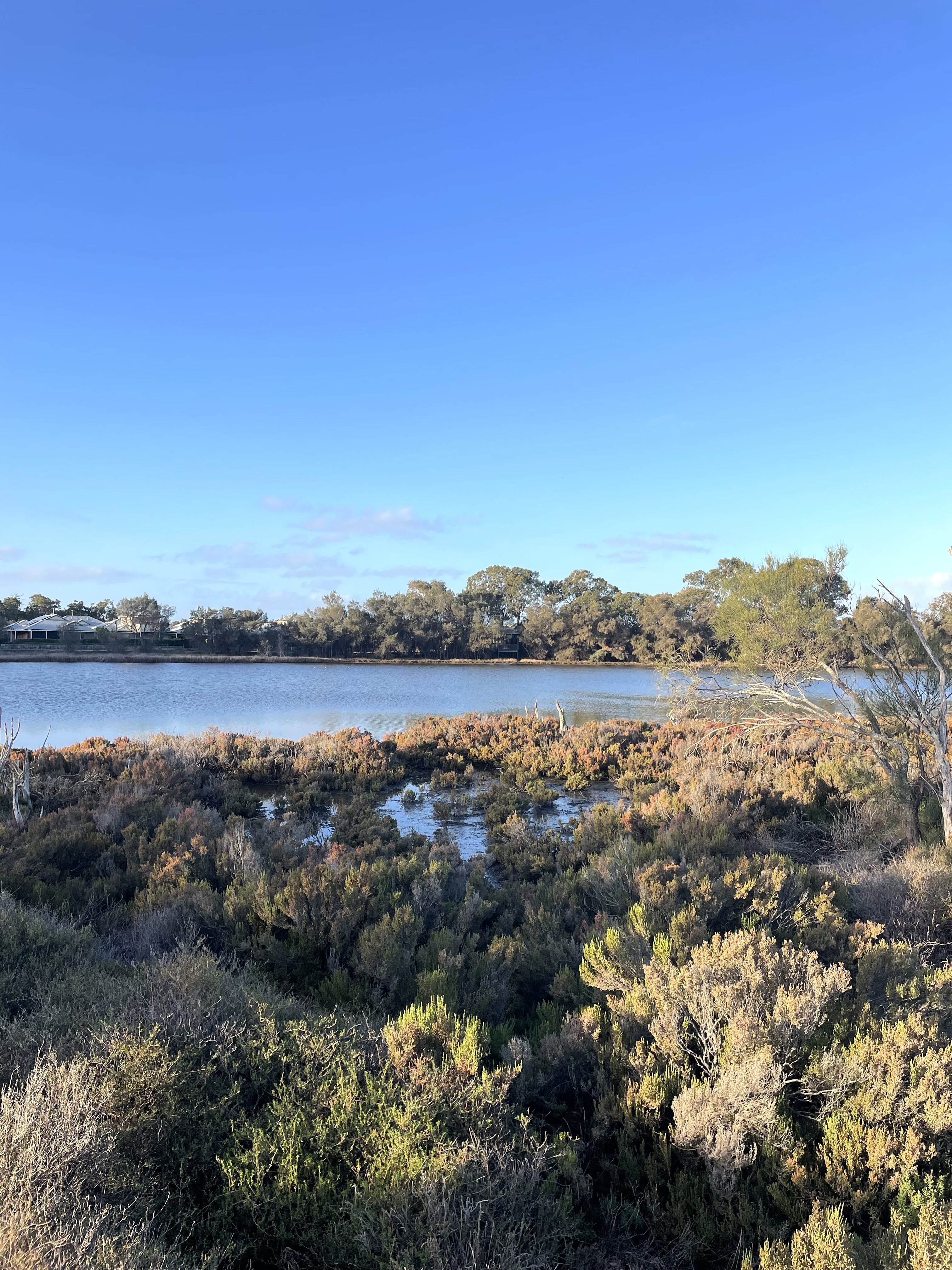
The Serpentine River is located approximately 60km south of Perth and originates beneath Bowerling Hill on the Darling Scarp. After descending from the Scarp, it enters the Swan Coastal Plain and flows westward, passing beneath the South Western Highway. It travels by the township of Serpentine before turning southward, eventually emptying into the Peel Inlet near Mandurah in Western Australia.
Accessibility
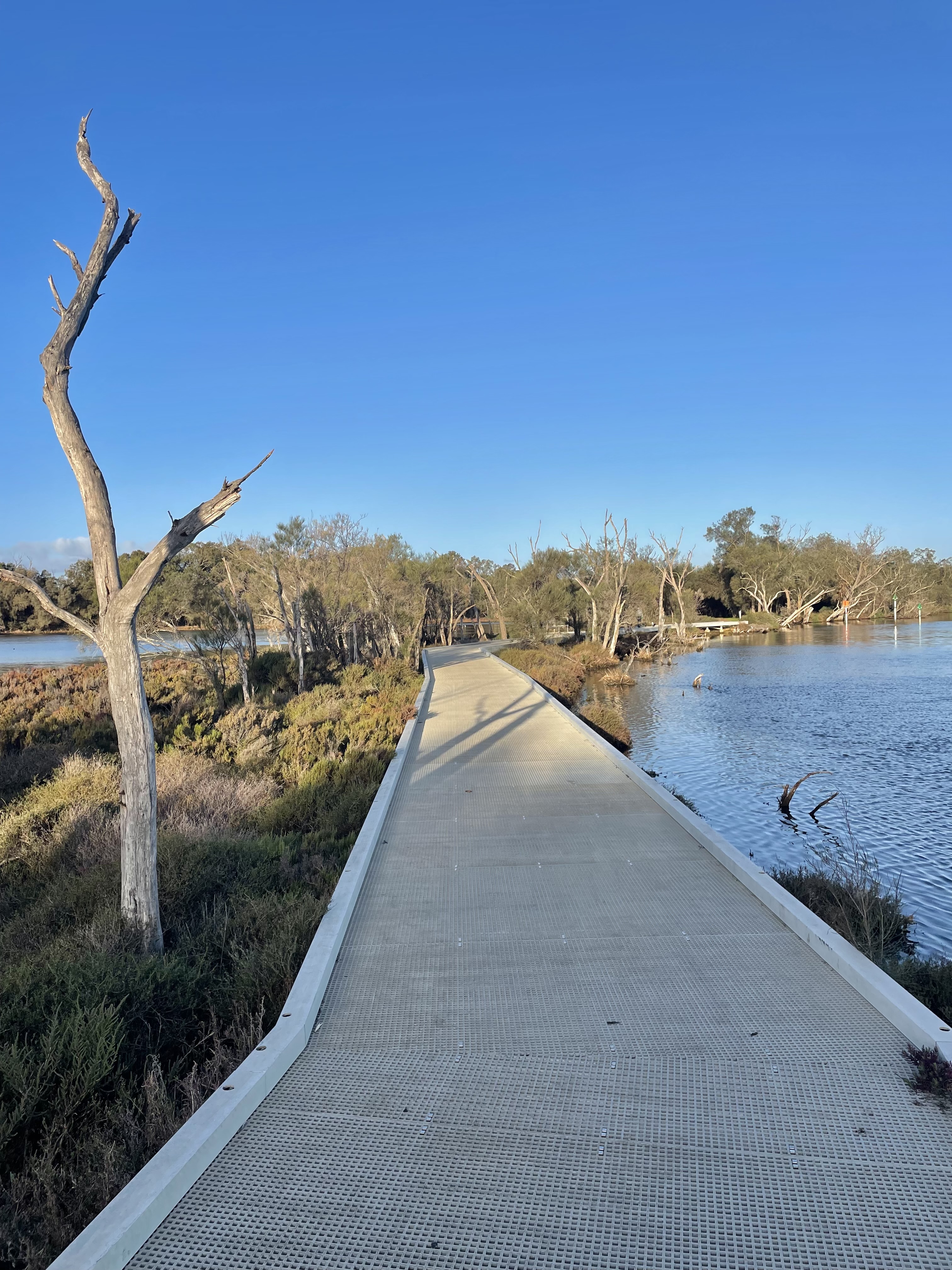
carparkdisability accessdisability parkinghard surface path
Activities
bird watchingcanoeing kayakingfishingmountain bikingnature photographyswimmingwalking
Astrophotography potential
No Astrophotography Potential
Astrophotography grade
None
Facilities
campsitecaravan parkgrass areahotelnightime lightingpicnic area
Way finding
No Way Finding Support
Address
Location
Old Pinjarra Road, Greenfields, Perth, Western Australia, 6210, AUS
Land tenure
Mixed across different local governments and DBCA reserves
Entry road
Sealed Road (Bi-Directional)
Car park distance (m)
200
Entry fee
No
Infrastructure grade
7
Natural amenity
9
Plumbed infrastructure
No
Visible powerlines
No
Coordinates (lat, lng)
-32.709, 115.71
Food & drink
Peel Estate Wines, Red Gum Winery, Ravenswood Hotel, Variations Distillery
Tours & experiences
Joseph and Dulcie Nannup Trail, WanderFest Serpentine, Jarrahdale Guided Hike
Site Highlights
You may also want to know...
- The Serpentine River is located approximately 60km south of Perth and originates beneath Bowerling Hill on the Darling Scarp.
- After descending from the Scarp, it enters the Swan Coastal Plain and flows westward, passing beneath the South Western Highway.
- It travels by the township of Serpentine before turning southward, eventually emptying into the Peel Inlet near Mandurah in Western Australia.
Biotic features
Fauna: The Serpentine River experiences tidal influence for approximately 20 kilometres upstream, reaching as far as Lake Goegrup. The river and surrounding Serpentine National Park are home to over 70 bird species, including the white-tailed black cockatoo (Urban Bushland, 2009). Dolphins are often seen navigating the lower stretches of the river (Estuary Guardians, 2022). During the dry season, rising salinity in the Peel-Harvey Estuary and lower rivers creates ideal nursery conditions for marine fish (Gibbs, 2011). With the first winter rains, freshwater inflows trigger the downstream migration of species such as sea mullet (Mugil cephalus), which return to the estuary and lower river.
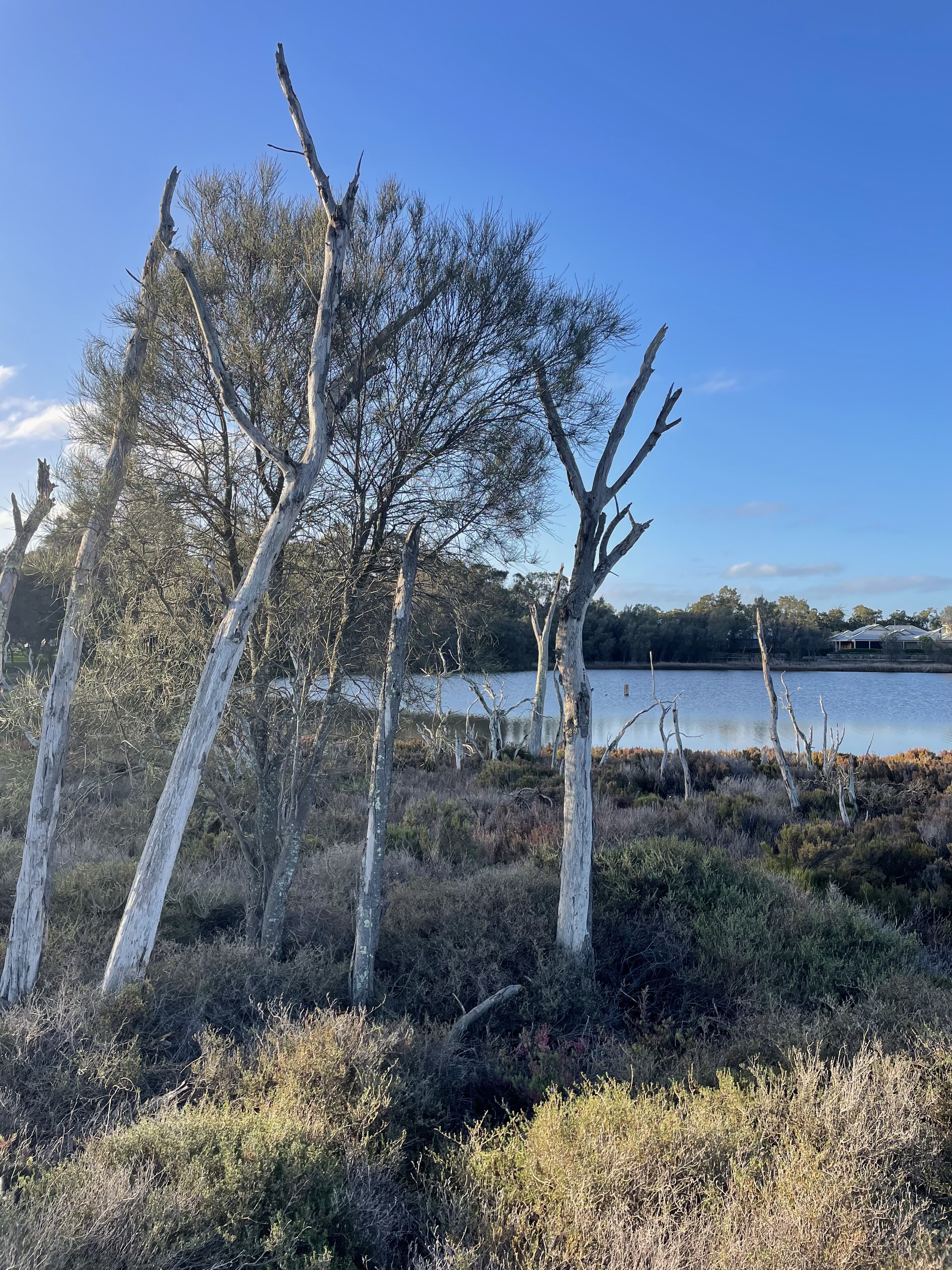
Flora: Riparian zones support a mix of vegetation. Flooded gums (Eucalyptus rudis) are common, alongside sheoaks (Casuarina obesa) and saltwater paperbarks (Melaleuca cuticularis). In some areas, saltwater intrusion has killed Melaleuca rhaphiophylla, now seen as dead remnants. In wetter floodplain areas adjacent to the river, native reeds like sedges (Cyperaceae family) and rushes (Juncaceae family) dominate. The Serpentine River catchment includes several areas where priority and threatened plant species have been recorded, reflecting the ecological importance of preserving native vegetation.
Abiotic features
The Serpentine River sits on the western edge of the Darling Plateau, an ancient plateau composed mainly of granite rock with dolerite intrusions and capped with laterite. Past weathering has created a complex of distinct landscapes (lateritic uplands, minor valleys, major valleys and scarp) (Urban Bushland, 2009). The river flows from the aquifers of the Yilgarn Craton down off the Darling Scarp to the Pinjarra Plains. The Serpentine River takes a right-angled bend and then flows parallel to the coastline for 24km to its entry into the Peel Inlet. This represents the boundary between the Bassendean dunes and the younger Spearwood dunes. The Spearwood dunes would have shaped the Serpentine during the late Pleistocene as the dunes created the North-South lake of Goegrup. The park’s soils are influenced by the granite bedrock and physical geological processes which are divided into those that are developed on site from either dolerite or granite.
Cultural aspects
The cultural and spiritual relationship of Aboriginal people with the Serpentine River has been recorded by early ethnographers such as Daisy Bates and J.E. Hammond. The connection of the Nannup family—particularly Joseph and Dulcie Nannup—is commemorated through a heritage trail, reflecting their deep ties to the river. For the Noongar people, the river is seen as a life-giving force, referenced in cultural tradition as bilya, or the umbilical cord—hence the name Waangaamaap Bilya for the Serpentine River.
The river provided vital food resources, with species such as sea mullet (Mugil cephalus) and Australian salmon (Arripis truttaceus)—known to the Noongar as kalda and ngarri—being especially important. Other aquatic species commonly relied upon include bream, yellowtail, mulloway, crabs, prawns, and cobbler.